
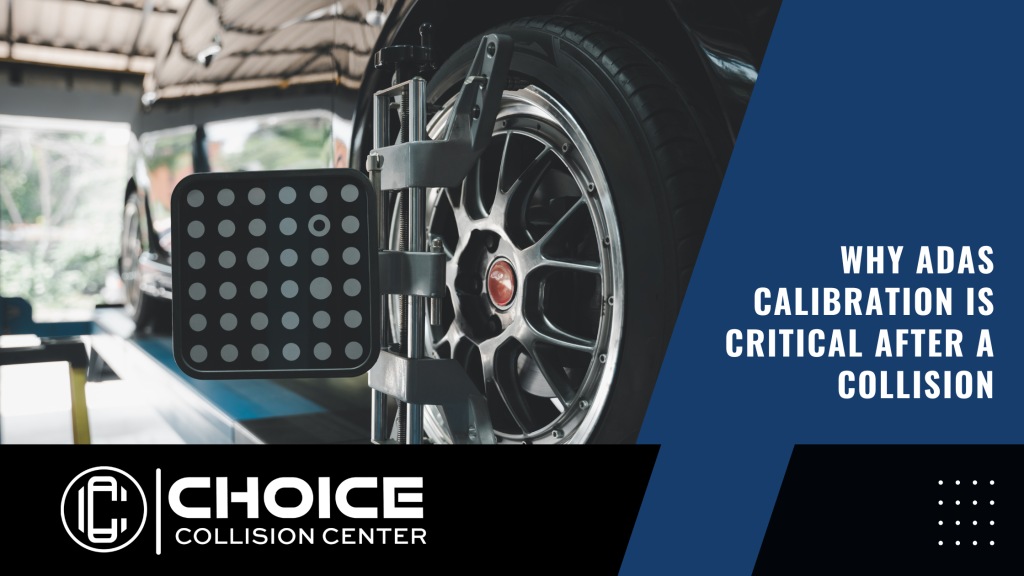
TL;DR:
- ADAS calibration ensures your vehicle’s safety systems work correctly after a collision
- Even minor accidents can disrupt sensors, cameras, and radar systems
- Skipping calibration can lead to safety risks and system failures
- Proper calibration requires specialized equipment and trained technicians
- Choosing a certified collision repair shop in Providence, RI, is essential for safe, accurate repairs
After a collision, most drivers focus on visible damage such as dents, scratches, or paint chips. But what you can’t see may matter even more.
Modern vehicles are equipped with Advanced Driver Assistance Systems (ADAS). These systems are designed to prevent accidents, assist drivers, and improve overall safety. However, even a minor collision can disrupt how these systems function.
If ADAS calibration is not performed correctly after repairs, your vehicle’s safety features may not respond as intended.
In this guide, we’ll explain what ADAS calibration is, why it’s critical after a collision, and what drivers in Providence, RI need to know to protect their safety and investment.
What Is ADAS?
ADAS stands for Advanced Driver Assistance Systems. These include features such as:
- Forward collision warning
- Automatic emergency braking
- Lane departure warning
- Blind spot monitoring
- Adaptive cruise control
These systems rely on sensors, cameras, and radar that must be precisely aligned to function correctly.
According to the National Highway Traffic Safety Administration (NHTSA), ADAS technologies play a key role in reducing crashes and improving road safety.
Why ADAS Calibration Is Required After a Collision
Even Minor Accidents Can Affect Sensors
One of the biggest misconceptions is that ADAS calibration is only needed after major damage.
In reality:
- A small bumper impact can shift radar sensors
- A windshield replacement can affect camera alignment
- Suspension or alignment changes can impact sensor positioning
Even slight misalignment can cause systems to respond incorrectly.
Safety Systems Depend on Precision
ADAS systems are calibrated to extremely tight tolerances.
If calibration is off:
- Emergency braking may activate too late or too early
- Lane assist may drift or fail to detect lines
- Adaptive cruise control may misjudge distance
The Insurance Institute for Highway Safety (IIHS) emphasizes that proper system performance depends on correct calibration and repair procedures.
Cost Factors: What Impacts ADAS Calibration Pricing?
ADAS calibration costs can vary depending on several factors:
1. Type of Vehicle
Luxury and newer vehicles often have more complex systems.
2. Number of Sensors
More sensors mean more calibration steps.
3. Type of Calibration Required
- Static calibration (performed in a controlled environment)
- Dynamic calibration (performed while driving)
4. Extent of Repairs
Structural repairs often require full recalibration of multiple systems.
While calibration adds to the repair cost, it is a necessary step for safety and should never be skipped.
Problems and Risks of Skipping ADAS Calibration
1. Increased Risk of Accidents
If systems don’t respond correctly, your risk on the road increases.
2. False Alerts or System Failures
Drivers may experience warning lights or inconsistent system behavior.
3. Liability Concerns
Improper repairs can create liability issues if systems fail in a future accident.
4. Reduced Vehicle Value
Incomplete repairs can impact resale value and buyer confidence.
Static vs Dynamic Calibration: What’s the Difference?
Static Calibration
- Performed in a controlled shop environment
- Uses specialized targets and equipment
- Requires precise measurements
Dynamic Calibration
- Performed while driving the vehicle
- Uses real-world conditions to recalibrate systems
Many vehicles require one or both types, depending on manufacturer guidelines.
This is why choosing a shop with proper equipment and training is critical.
Why Certification and Equipment Matter
ADAS calibration is not a basic repair step. It requires:
- OEM-approved procedures
- Advanced diagnostic tools
- Controlled environments
- Continuous technician training
Shops without the right equipment may skip calibration or outsource it, which can lead to inconsistencies.
Working with a provider that offers proper scans and calibrations ensures your vehicle’s systems are restored correctly.
How ADAS Fits Into the Collision Repair Process
ADAS calibration is typically performed toward the end of the repair process, after:
- Structural repairs are completed
- Alignment is restored
- Components are reinstalled
This ensures all systems are calibrated based on the final repaired condition of the vehicle.
It is a critical final step before the vehicle is returned to the customer.
Best Practices for Providence Drivers After a Collision
If your vehicle has been in an accident, here’s what you should do:
1. Ask About ADAS Calibration
Confirm that calibration is included in your repair plan.
2. Choose a Certified Repair Shop
Look for I-CAR Gold Class and OEM certifications.
3. Don’t Focus Only on Cost
Cheaper repairs may skip critical steps like calibration.
4. Request Documentation
Ensure calibration was completed and documented properly.
Reviews and Industry Insight
Across the collision repair industry, one of the most common issues reported is incomplete repairs involving ADAS systems.
Organizations like I-CAR stress the importance of proper post-repair scanning and calibration to ensure vehicle safety systems function as designed.
What’s becoming increasingly clear across the industry is that not all repair facilities are keeping up with the rapid advancement of vehicle technology. As ADAS systems become more complex, the gap between properly equipped shops and those without the right tools or training continues to grow.
Industry studies and technician feedback consistently highlight that missed calibrations or improper procedures are among the top concerns in modern collision repair. In many cases, these issues are not visible to the customer, which makes choosing the right repair facility even more important.
In addition to I-CAR, organizations like the National Highway Traffic Safety Administration (NHTSA) and Insurance Institute for Highway Safety (IIHS) emphasize that advanced safety systems must be restored to manufacturer standards to maintain their effectiveness. These systems are designed as part of a larger safety network, and even small errors can impact overall vehicle performance.
Customers who choose certified repair facilities often report higher satisfaction, better communication, and safer long-term outcomes. Certified shops are more likely to follow OEM procedures, invest in ongoing training, and prioritize complete, accurate repairs over shortcuts.
Ultimately, industry insight reinforces a simple truth: proper ADAS calibration is not just best practice. It is essential for safe, reliable repairs.
Why ADAS Calibration Matters More Than You Think
ADAS calibration is not just a technical step. It is a critical safety requirement.
Your vehicle’s ability to detect hazards, assist in driving, and respond to emergencies depends on properly functioning systems. When these systems are even slightly off, the risk is real.
In Providence, RI, where traffic conditions, weather, and road environments vary, having reliable safety systems is essential.
What many drivers don’t realize is that ADAS systems are designed to operate within extremely precise tolerances. A camera that is off by just a few millimeters or a slightly misaligned sensor can dramatically change how your vehicle interprets the road. That could mean delayed braking, missed obstacles, or incorrect lane positioning.
There is also a trust factor involved. Drivers rely on these systems daily, often without thinking about them. When they are not calibrated properly, that trust is compromised. You may not even notice an issue until a critical moment when the system is expected to respond.
Additionally, as vehicles become more advanced, proper calibration is becoming a standard part of safe, complete repairs. It is no longer optional for many modern vehicles. It is required to restore the vehicle to pre-accident condition.
Choosing a repair facility that understands and prioritizes calibration ensures your vehicle is not just repaired, but truly restored.
FAQs
Q: What is ADAS calibration?
A: ADAS calibration is the process of aligning sensors, cameras, and radar systems to ensure driver assistance features function correctly.
Q: Is ADAS calibration required after every collision?
A: Not always, but it is required whenever sensors or related components are affected.
Q: How do I know if my car needs calibration?
A: A professional inspection and scan will determine if calibration is necessary.
Q: Can I skip ADAS calibration to save money?
A: Skipping calibration is not recommended as it can compromise safety and system performance.
Q: How long does ADAS calibration take?
A: It depends on the vehicle and systems involved. Some calibrations are quick, while others take longer.
Q: Does insurance cover ADAS calibration?
A: In most cases, if calibration is required as part of the repair, it is covered by insurance.
Q: What happens if calibration is done incorrectly?
A: Systems may malfunction, provide false alerts, or fail during critical moments.
Q: Are all repair shops equipped for ADAS calibration?
A: No. Proper calibration requires specialized equipment and trained technicians.
Trusted ADAS Calibration in Providence, RI Starts Here
If you’ve been in an accident, choosing the right collision repair shop can make all the difference in your safety, your vehicle’s performance, and your peace of mind.
At Choice Collision Centers in Providence, RI, the focus is on doing the job the right way from start to finish. That means thorough damage assessments, OEM-aligned repair procedures, proper parts selection, and complete safety system recalibration before your vehicle is returned.
From handling insurance communication to providing clear updates throughout the process, the goal is to make collision repair as smooth and stress-free as possible. You should never feel left in the dark about what’s happening with your vehicle, and you should always feel confident in the quality of the work being performed.
Whether your vehicle has minor cosmetic damage or requires more advanced structural repairs, having a certified, experienced team matters. The right repair process does more than restore how your car looks. It protects how it performs and how it protects you in the future.
If you’re looking for expert collision repair in Providence, RI, with a team that prioritizes quality, transparency, and customer care, Choice Collision Centers is ready to help.
Visit us at: 125 Ernest St, Providence, RI 02905
Call: (401) 245-0213
Request your free estimate or contact our team today:
https://choicecollisioncenters.com/contact-us/
