
After a car accident, many drivers are unsure what to do next. One of the earliest steps is getting a collision repair estimate, but that step often raises more questions than answers. What does a free estimate actually include? How accurate is it? And does getting one mean you are committing to repairs?
This guide explains what to expect from a free collision repair estimate, including how the process works in Providence, Rhode Island, and Fall River, Massachusetts, what information an estimate provides, and where its limitations are. Understanding this step helps you make informed decisions, communicate more effectively with your insurance company, and avoid surprises later in the repair process.
What a free collision repair estimate is (and what it is not)
A collision repair estimate is a written assessment of visible damage and the anticipated cost to repair that damage. It is designed to give you an initial understanding of what repairs may be needed, how extensive the damage appears, and how insurance may be involved in the process.
A free estimate is meant to help you make informed decisions early, especially when determining next steps after an accident or when speaking with your insurance company. It provides transparency, but it is based only on what can be seen without disassembling the vehicle.
A free estimate is:
- An evaluation of visible damage
- A starting point for the repair process
- Useful for insurance claims and planning
A free estimate is not:
- A final repair bill
- A guarantee that no additional damage exists
- A commitment to complete repairs
Modern vehicles often hide damage behind panels or within electronic systems. Understanding the limits of a free estimate helps prevent confusion later and sets realistic expectations as the repair process moves forward.
What happens during a collision repair estimate?
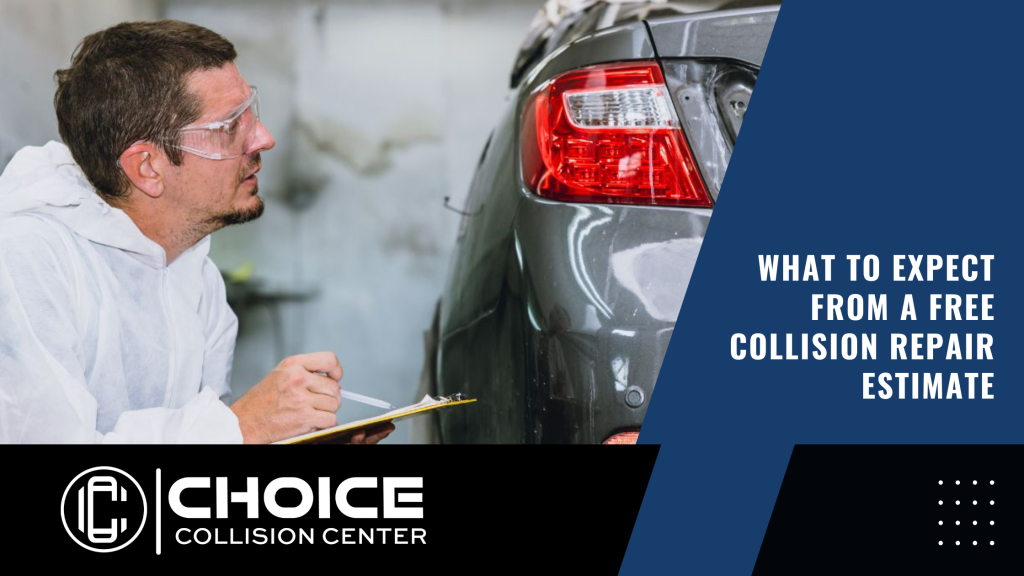
During an estimate appointment, a repair professional visually inspects the vehicle and documents damaged areas. Photos are often taken, and repair estimating software is used to outline potential repair operations based on what is visible at the time.
This process may include:
- Reviewing exterior body damage
- Identifying damaged panels, glass, or trim
- Noting potential structural concerns
- Documenting visible mechanical or suspension issues
The estimator may also ask questions about how the accident occurred, as impact direction and speed can provide important clues about possible hidden damage. This information helps guide the initial repair plan and highlights areas that may need closer inspection later.
In many cases, the estimator cannot see behind panels, under the vehicle, or inside electronic systems without disassembly. Modern vehicles often conceal damage beneath cosmetic surfaces or within safety systems. This is why estimates are considered preliminary until further inspection occurs. A thorough estimate sets expectations, but additional steps are often required to fully understand the scope of repairs needed.
Cost transparency: what influences the estimated amount?
One of the most common questions drivers ask is why estimates can vary so widely between vehicles or repair facilities.
Key factors that influence estimate cost
Extent and location of damage
Surface damage may appear minor, while underlying damage can be more complex.
Vehicle make, model, and year
Newer vehicles often require additional procedures and parts.
Material types
Aluminum, high-strength steel, and composite materials require specialized repair methods.
Paint and refinishing needs
Color type, blending requirements, and the number of affected panels impact labor and materials.
Labor operations required
Some procedures are not visible during an initial estimate but may later be required.
A free estimate provides transparency, but it is only the first step in understanding true repair needs.
Why estimates often change after repairs begin
It is common for collision repair estimates to change once repairs are underway. This does not mean the original estimate was inaccurate or misleading. Initial estimates are created using visible damage only, before the vehicle has been disassembled or fully inspected.
Once repairs begin, technicians often remove panels, bumpers, or interior components to access damaged areas. This deeper inspection frequently reveals damage that could not be seen during the initial estimate, especially in modern vehicles with layered structures and tightly packaged components.
Reasons include:
- Damage hidden behind panels
- Additional parts required for proper fit
- Manufacturer-required procedures identified later
- Electronic systems needing further inspection
Modern vehicles rely heavily on electronics and advanced safety systems. Even a relatively minor collision can affect sensors, cameras, or control modules that are not visibly damaged. This is why pre- and post-repair scanning services are often necessary to ensure safety systems are functioning correctly.
Estimate changes are typically documented through insurance supplements and reviewed before additional work continues. While changes can feel inconvenient, they are often a sign that the repair is being completed thoroughly and in accordance with manufacturer standards rather than rushed or incomplete.
Problems and misunderstandings around free estimates
Free estimates are helpful, but misunderstandings can create frustration if expectations are not clearly set from the beginning. Many drivers assume an estimate represents the final cost or scope of repairs, which is rarely the case with collision damage.
“The estimate should be exact.”
Estimates are based on visible damage only. They are not final invoices. Hidden damage behind panels, beneath the vehicle, or within safety systems often cannot be identified until repairs begin.
“If insurance wrote the estimate, it must cover everything.”
Insurance estimates are often written quickly and may rely on photos or limited inspections. Additional repairs frequently require updates once the vehicle is disassembled and manufacturer-required procedures are identified.
“Choosing a shop locks me in.”
Getting an estimate does not obligate you to proceed with repairs. You are still free to ask questions, review options, or seek additional information before authorizing work.
Clear communication during the estimate stage helps prevent these issues later. A repair facility that explains limitations upfront and answers questions honestly helps set realistic expectations and builds trust throughout the repair process.
Comparing estimate types: in-person vs photo-based estimates
In-person estimates
Pros
- More thorough inspection
- Better opportunity for questions
- Higher accuracy
Cons
- Requires scheduling and travel
Photo-based or virtual estimates
Pros
- Convenient
- Faster initial review
Cons
- Limited visibility
- Higher likelihood of missed damage
For many repairs, especially those involving structure or safety systems, an in-person estimate is more informative.
Best practices for getting the most out of a free estimate
Drivers can take a few simple steps to make the collision repair estimate process more effective and less stressful. Being prepared and asking the right questions helps ensure you understand what the estimate includes and what may come later.
Drivers can take a few steps to make the estimate process more effective:
- Bring insurance claim information if available
- Ask how hidden damage is handled
- Ask whether scanning or calibration may be required
- Request clear explanations of line items
- Understand that estimates may evolve
It also helps to share details about how the accident occurred, such as where the vehicle was hit or whether warning lights appeared afterward. This information can guide the estimator toward areas that may need closer inspection later.
Do not hesitate to ask what is included in the estimate and what is not. Understanding which items are visible repairs versus potential future findings helps set realistic expectations. Asking how supplements are handled and how communication works during repairs can also prevent confusion later.
Learning how auto body repair estimates are developedhelps set realistic expectations and builds trust in the process. An informed customer is better equipped to make confident decisions and navigate the repair process smoothly from start to finish.
What happens after the estimate?
After the estimate is complete, you can:
- Submit it to your insurance company
- Schedule repairs
- Compare repair approaches
- Ask follow-up questions
If you proceed with repairs, the vehicle may undergo further inspection and repair planning. For cosmetic damage only, services such as dent and scratch repair options may be discussed if appropriate.
How estimates fit into the overall repair process
A free estimate is just one part of a larger repair journey. Once repairs are completed, the vehicle should go through a thorough review.
A detailed post-repair quality check and vehicle detailing help confirm that repairs meet safety and quality standards before the vehicle is returned.
Trusted external resources on repair estimates and vehicle safety
For independent information related to vehicle repairs and safety standards, these sources are widely recognized:
- Consumer vehicle safety guidance – National Highway Traffic Safety Administration
https://www.nhtsa.gov/ - Crash repair and safety research – Insurance Institute for Highway Safety
https://www.iihs.org/ - Collision repair training standards – I-CAR
https://www.i-car.com/ - Automotive technician certification – ASE
https://www.ase.com/
Frequently Asked Questions
Q: Is a free collision repair estimate really free?
A: Yes. A free estimate provides an assessment of visible damage and potential repair costs without obligation to proceed.
Q: How long does a collision repair estimate take?
A: Most estimates take a short amount of time, but complex damage may require additional inspection or scheduling.
Q: Can I get an estimate before filing an insurance claim?
A: Yes. Many drivers get an estimate first to understand potential damage and costs before contacting insurance.
Q: Why does my insurance estimate look different from the shop’s estimate?
A: Insurance estimates are often based on limited information. Repair facilities may identify additional required procedures during inspection.
Q: Does getting an estimate mean repairs will start immediately?
A: No. An estimate does not begin repairs unless you authorize the work.
Q: Should I bring my insurance paperwork to a collision repair estimate?
A: Bringing your insurance information can be helpful, but it is not required. An estimate can still be completed without an active claim.
Q: Can a free estimate identify all damage to my vehicle?
A: A free estimate identifies visible damage only. Hidden damage may be discovered later once repairs begin, and parts are removed.
Q: What should I do if I have questions after receiving my estimate?
A: You should ask the repair shop to explain any line items or recommendations, so you fully understand the estimate before deciding how to proceed.
Get Clear, Honest Answers With a Free Collision Repair Estimate
If you need a free collision repair estimate in Providence, RI, or Fall River, MA, Choice Collision Centers can walk you through the process and answer your questions clearly.Schedule a free estimate or inspection to better understand your vehicle’s condition and your repair options, without pressure or obligation.
