
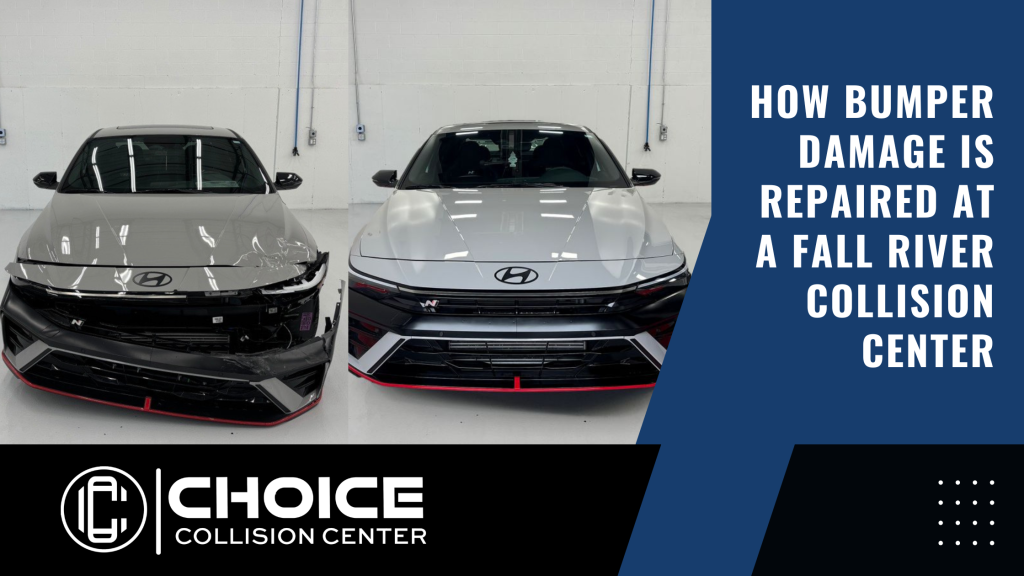
SUMMARY
- Modern bumper repair involves much more than fixing cosmetic damage.
- Today’s bumpers often contain sensors, cameras, and advanced safety technology.
- Professional inspections help identify hidden damage behind the bumper cover.
- Some bumpers can be repaired, while others require replacement based on manufacturer guidelines.
- Paint matching and refinishing are critical for a seamless repair.
- Many vehicles require post-repair scans and calibrations after bumper work.
- OEM repair procedures help restore vehicle safety and performance.
- A professional collision center can identify hidden damage and ensure repairs meet manufacturer standards.
Why Bumper Damage Should Never Be Ignored
Bumpers are designed to protect your vehicle during low-speed impacts and help absorb crash energy. Whether you’ve experienced a parking lot accident, rear-end collision, or minor fender bender in Fall River, bumper damage should never be dismissed as purely cosmetic.
Modern bumpers do far more than improve appearance. Many vehicles now house:
- Parking sensors
- Blind spot monitoring systems
- Adaptive cruise control sensors
- Forward collision warning technology
- Cameras and radar equipment
Because of these advancements, bumper repairs have become far more complex than simply replacing a damaged panel.
At Choice Collision Centers in Fall River, technicians follow a structured repair process designed to restore both the appearance and safety of the vehicle.
The First Step: A Complete Damage Inspection
Many drivers are surprised to learn that visible damage rarely tells the whole story.
A bumper may have only a small crack or dent while concealing damage to:
- Reinforcement bars
- Energy absorbers
- Sensor brackets
- Wiring harnesses
- Structural mounting points
This is why every repair begins with a detailed inspection.
Professional technicians evaluate both visible and hidden damage before developing a repair plan. Modern collision repair facilities often perform pre-repair scans to identify electronic issues that may not be immediately apparent. OEM repair information and diagnostic procedures play a critical role in this process.
Determining Whether the Bumper Can Be Repaired
Not every damaged bumper needs to be replaced.
In many cases, technicians can successfully repair:
- Minor dents
- Surface scratches
- Paint damage
- Small cracks
- Cosmetic imperfections
Repairing a bumper can often reduce costs while restoring appearance and functionality.
The decision depends on several factors:
Extent of Damage
Minor cosmetic damage is often repairable, while extensive cracks or structural damage may require replacement.
Material Type
Modern bumpers are commonly made from specialized plastics and composite materials that can sometimes be repaired using manufacturer-approved procedures.
OEM Repair Guidelines
Vehicle manufacturers provide specific repair procedures that determine when repair is acceptable and when replacement is required. Following these procedures helps ensure vehicle safety and performance.
When Bumper Replacement Is Necessary
Some damage cannot be repaired safely.
Replacement may be recommended when:
- Mounting points are broken
- Structural integrity is compromised
- Sensor locations are damaged
- Manufacturer guidelines require replacement
- Damage extends beyond repairable limits
Modern bumpers play an important role in crash energy management, making proper repairs essential.
According to industry repair standards, bumper-related repairs frequently involve evaluating structural components, safety systems, and sensor placement in addition to visible damage.
Repairing Hidden Damage Behind the Bumper
One of the most important parts of the repair process occurs after the bumper cover is removed.
Technicians inspect:
- Reinforcement bars
- Impact absorbers
- Mounting brackets
- Wiring systems
- ADAS components
Many low-speed collisions create hidden damage that isn’t visible until disassembly begins.
Addressing these issues early helps prevent future safety concerns and ensures the repair restores the vehicle properly.
Paint and Refinishing
Once repairs are completed or a replacement bumper is installed, refinishing begins.
Paint matching has become increasingly sophisticated because modern automotive finishes often include:
- Metallic paints
- Pearl coatings
- Multi-stage finishes
- Specialized clear coats
Professional paint and refinishing services help ensure repaired areas blend seamlessly with surrounding panels.
Technicians use computerized color-matching technology and manufacturer paint formulas to achieve an accurate finish.
Why Paint Matching Matters
A repaired bumper should not stand out from the rest of the vehicle.
Proper refinishing helps:
- Restore vehicle appearance
- Protect resale value
- Prevent corrosion
- Deliver a factory-quality finish
Even a structurally perfect repair can look incomplete if paint matching is poor.
This is why quality collision repair facilities invest heavily in refinishing technology and technician training.
The Importance of Scans and Calibrations
Many newer vehicles require additional procedures after bumper repairs are completed.
Modern safety systems often rely on sensors mounted in or behind bumpers.
Examples include:
- Adaptive cruise control
- Automatic emergency braking
- Blind spot monitoring
- Parking assistance systems
Industry guidance shows that even repairs involving bumper removal, replacement, or related components may require recalibration procedures to ensure proper sensor performance.
Professional scans and calibrations help verify these systems continue operating as intended after repairs are completed.
Why OEM Repair Procedures Matter
Modern vehicles are engineered with precise repair requirements.
OEM procedures help determine:
- Which parts can be repaired
- Which parts require replacement
- Calibration requirements
- Material-specific repair methods
- Structural repair standards
Choosing OEM-certified repairs helps ensure repairs follow manufacturer recommendations designed to restore vehicle safety and performance.
According to repair industry resources, OEM procedures play a critical role in modern collision repair because vehicle technologies continue to evolve rapidly.
Final Inspection and Quality Control
Before returning the vehicle to the customer, technicians perform a final quality inspection.
This process often includes:
- Repair verification
- Panel fitment inspection
- Paint quality evaluation
- Safety system checks
- Diagnostic scans
Professional detailing and final inspection services help ensure repairs meet quality standards before delivery.
The goal is to confirm the vehicle is safe, functional, and visually restored.
Common Mistakes Drivers Make After Bumper Damage
Waiting Too Long to Schedule Repairs
One of the most common mistakes drivers make is postponing repairs because the damage appears minor. A small crack, dent, or scuff may not seem urgent, but hidden issues behind the bumper can worsen over time. Moisture can enter damaged areas, mounting brackets can become weaker, and unseen structural damage may lead to additional repair costs if left unaddressed. Scheduling an inspection soon after an accident helps identify problems before they become more expensive to fix.
Assuming Damage Is Only Cosmetic
Modern bumpers are designed to do much more than improve a vehicle’s appearance. Many contain safety-related components such as parking sensors, radar units, cameras, and impact-absorbing structures. Even if the visible damage appears minor, these hidden systems may have been affected by the collision. Professional inspections help ensure important safety features continue functioning properly after repairs are completed.
Choosing Repairs Based Solely on Price
It’s natural to compare estimates after an accident, but the lowest price is not always the best value. Some estimates may exclude necessary procedures such as diagnostic scans, sensor calibrations, OEM repair requirements, or hidden damage repairs. Choosing a repair facility based solely on cost can sometimes lead to incomplete repairs that affect vehicle safety, performance, and long-term value.
Ignoring Warning Lights
Dashboard warning lights should never be dismissed after a collision. Even a minor impact can trigger faults in safety systems, sensors, airbags, or electronic components. These warnings are often early indicators that additional diagnostics are needed. Ignoring them can allow problems to worsen and may affect the vehicle’s ability to protect occupants in the future.
Prompt professional repairs help prevent larger issues from developing, restore vehicle safety systems properly, and ensure your vehicle performs as intended after an accident.
Frequently Asked Questions
Q: Can a cracked bumper be repaired?
A: In many cases, yes. Small cracks can often be repaired depending on the location, material, and manufacturer repair guidelines.
Q: How long does bumper repair take?
A: Minor repairs may take a few days, while more extensive repairs or replacements can require additional time depending on parts availability and repair complexity.
Q: Does bumper damage affect vehicle safety?
A: Yes. Modern bumpers often contain structural and safety-related components that may be affected by a collision.
Q: Will insurance cover bumper repairs?
A: Coverage depends on your policy and the circumstances surrounding the accident.
Q: Why do bumpers require calibrations?
A: Many modern safety systems rely on sensors located within or near the bumper. Repairs may require recalibration to ensure proper operation.
Q: Can hidden damage exist after a minor collision?
A: Absolutely. Damage to reinforcement bars, brackets, sensors, and wiring is often hidden behind the bumper cover.
Q: What is the difference between bumper repair and replacement?
A: Repair restores the existing bumper, while replacement involves installing a new bumper when damage exceeds repairable limits.
Q: Are OEM repair procedures important?
A: Yes. OEM procedures help ensure repairs meet manufacturer standards for safety, performance, and durability.
Schedule a Bumper Repair Inspection in Fall River Today
Bumper damage may appear minor, but hidden structural issues, sensor damage, and safety concerns often exist beneath the surface. A professional inspection helps ensure all damage is identified and repaired correctly.
Whether your vehicle has a small dent, cracked bumper, paint damage, or more significant collision-related issues, Choice Collision Centers provides comprehensive auto body repair services designed to restore your vehicle’s appearance and safety.
You can also contact Choice Collision Centers to schedule an inspection or discuss your repair options with an experienced member of the team.
Visit Choice Collision Centers in Fall River at 645 Brayton Ave, Fall River, MA 02721, United States, where trained collision repair professionals can assess bumper damage, identify hidden issues, and help restore your vehicle to pre-accident condition.
